

Multi-Label Medicines and the Dilemma of Formula Selection
Once a medicine is assigned too many labels, a dilemma of formula selection appears. We note that each drug in Bencao Qiuzhen often carries five or six related labels. Although this makes searching convenient, it can also leave the physician unable to determine which label is the primary axis in clinical decision-making.
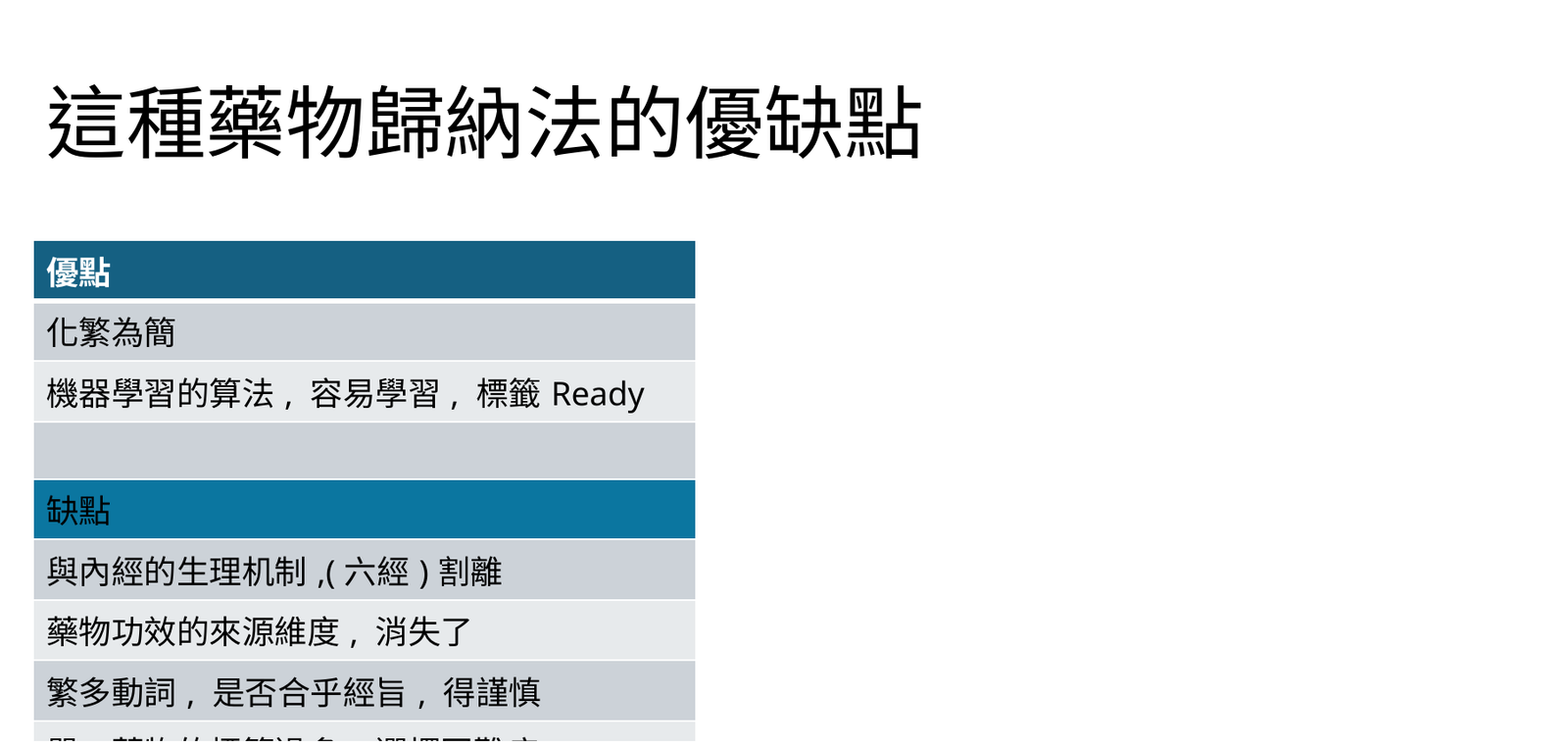
The core issue is that labels are not causes. If a medicine can drain heat from the Large Intestine, Stomach, and Small Intestine, that does not mean these effects exist on the same causal level. It may have one more fundamental qi-transformational direction that produces different outcomes in different organs and locations. Without distinguishing primary cause, secondary cause, branch manifestation, and downstream result, multi-labeling merely creates information inflation.
Using several heat-draining medicines, we show how one substance may be classified under heat in several zang-fu. This is useful for machine learning or data organization, but it is not necessarily enough for clinical derivation. What matters more is identifying dimensions of the medicine’s innate endowment: nature, flavor, form, bodily structure, ascent/descent, clarity/turbidity, timing, and the channels it enters.