

Clarity, Turbidity, Density, and Speed of Onset
Clarity and turbidity are concepts we particularly stress should not be ignored. In provisional modern language, they can be approached through density, weight, and layer of action. Clear substances float upward, move to the exterior, and react quickly; turbid substances sink downward, enter the interior, and act more slowly and deeply.
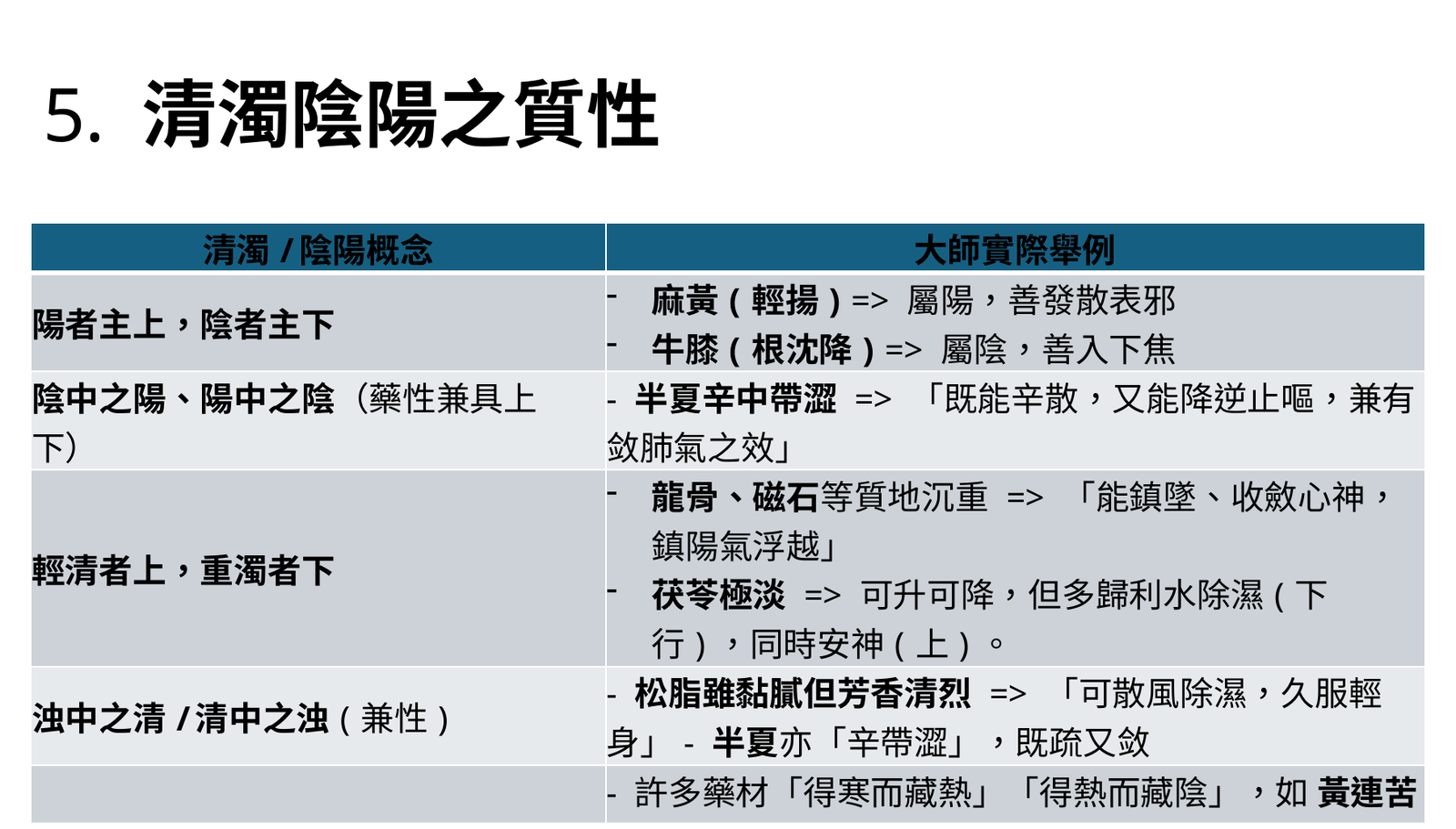
Clarity and turbidity in Chinese medicine are not simply physical density, but density provides a useful point of entry. Aromatic drugs, alcohol, and substances produced through distillation or volatilization are relatively clear and often act quickly; minerals, dragon bone, magnetite, and similar materials are heavier than plants and tend more toward turbidity, sinking, and settling. Relative comparison matters more than absolute weight.
We cite Zhu Jinzhong’s empirical summary of onset times: some medicines may begin to act in roughly ten minutes, while others require two hours. The speaker interprets this as closely related to clarity/turbidity, aroma, movement to the exterior, and entry into the interior. Alcohol becomes lighter through distillation and can therefore carry medicines rapidly through the body.