

Guest-Qi Day Governance, Supplementation and Drainage, and the Source of the 'Pungent + Sour Transform into Sweet' Formula
Within the broad comparison of host-time and guest-time treatment rules in the “Great Treatise on the Utmost Truth,” one of the most intriguing structures—and one that this article argues directly influenced the compositional logic of many later famous classical formulas, such as Cinnamon Twig Decoction and Mume Pill—is the guest-qi day-governance supplementation/drainage model. Combination mnemonics transmitted for centuries in Chinese medicine—“pungent and sour transform into sweet; salty and bitter transform into sour; sweet and pungent transform into bitter; sour and salty transform into pungent; bitter and sweet transform into salty”—are presented here as having their underlying source preserved in the Inner Canon passages on treating guest qi.
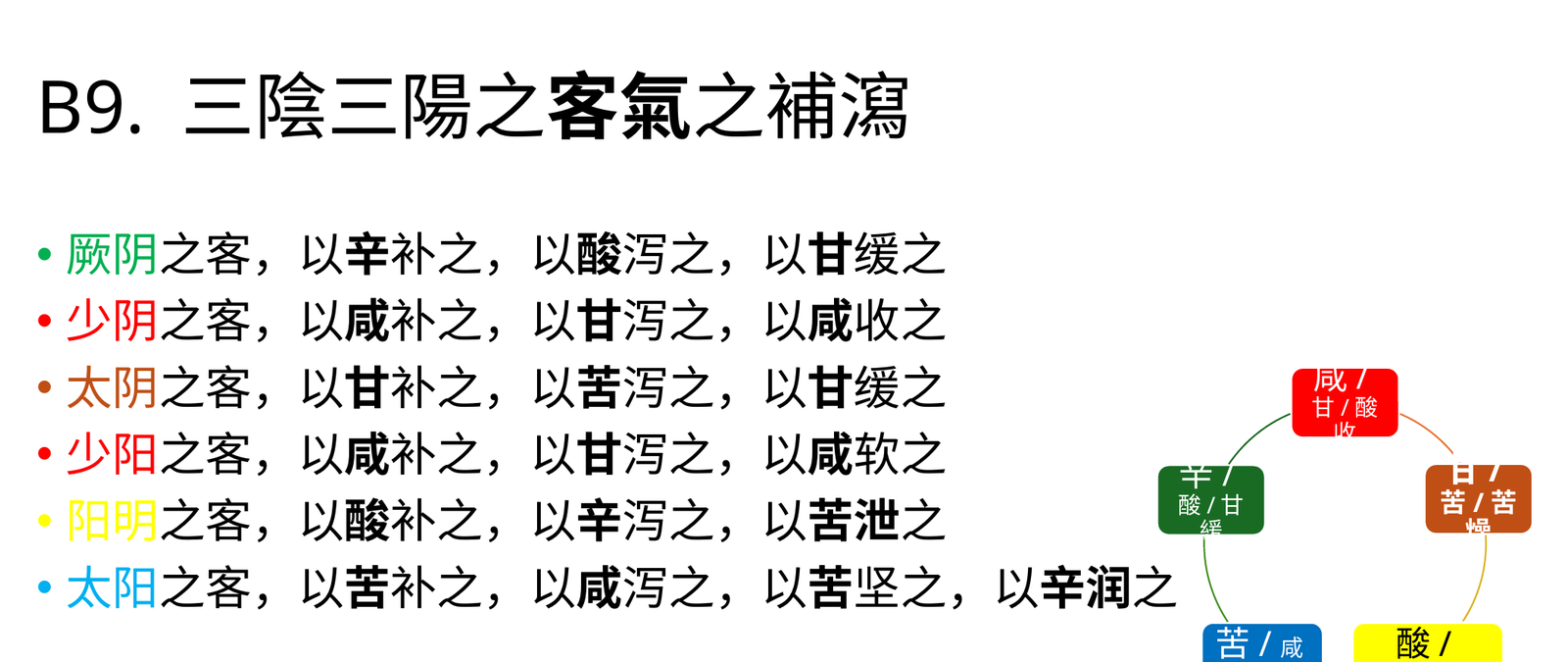
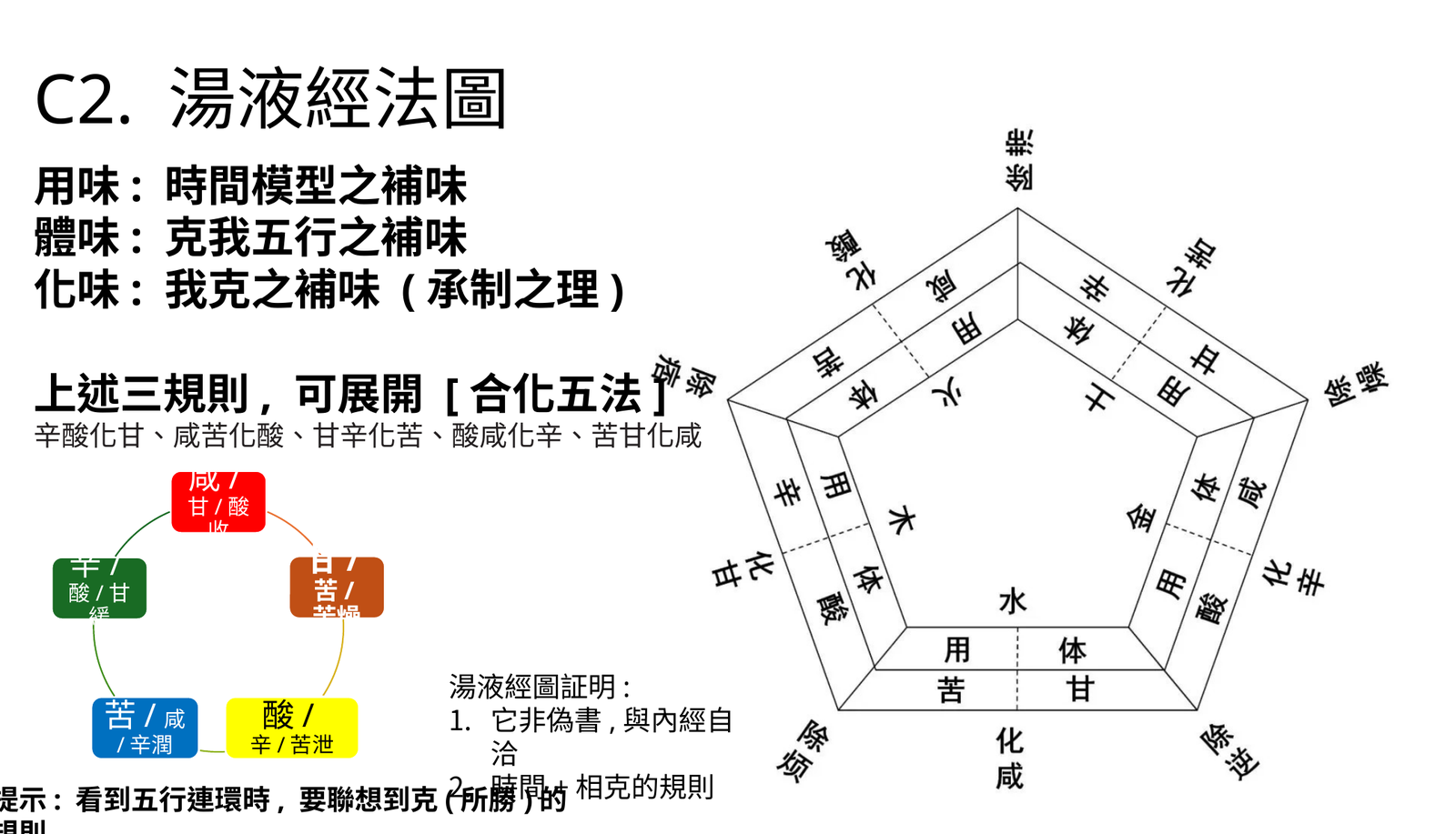
When guest qi governs the day and induces disease, the temporal model is said to require more than the ordinary direct opposition of supplementing and draining positions. It must also introduce an advanced method of Five-Phase combination and transformation: by combining two flavors of specific properties—such as pungent and sour—in a particular proportion, the body is proposed to “combine and transform” them into a third energetic form—for example sweet, corresponding to Earth—thereby producing a higher-dimensional systemic harmonization.
Consider the line, “For Jueyin as guest, supplement it with pungent, drain it with sour, and relax it with sweet.” The article reads these four characters as the formula “pungent + sour transform into sweet.” It presents this as a highest essence of the long-lost Method of the Decoction Classic and as a core formula behind Zhang Zhongjing’s classical prescriptions in the Shanghan Lun. In famous formulas represented by Ephedra Decoction and Cinnamon Twig Decoction, pungent herbs such as cinnamon twig or fresh ginger and sour herbs such as white peony are described as pairing and resonating in the body to transform into the sweet energetic form of Central Earth. The article locates the first-principle source of this proposed mechanism in the Inner Canon’s strict rules for treatment when guest qi governs the day.