

Three-Dimensional Symbolic Convergence in Bencao Qiuzhen
In this course, Bencao Qiuzhen is treated as an ancient attempt at symbolic convergence in the face of a vast body of materia-medica data. Huang Gongxiu, an imperial physician of the Qianlong era, did not simply list medicines. He tried to place them into several dimensions that could be classified, compared, and reasoned over, allowing the physician to see structure even among hundreds of substances.
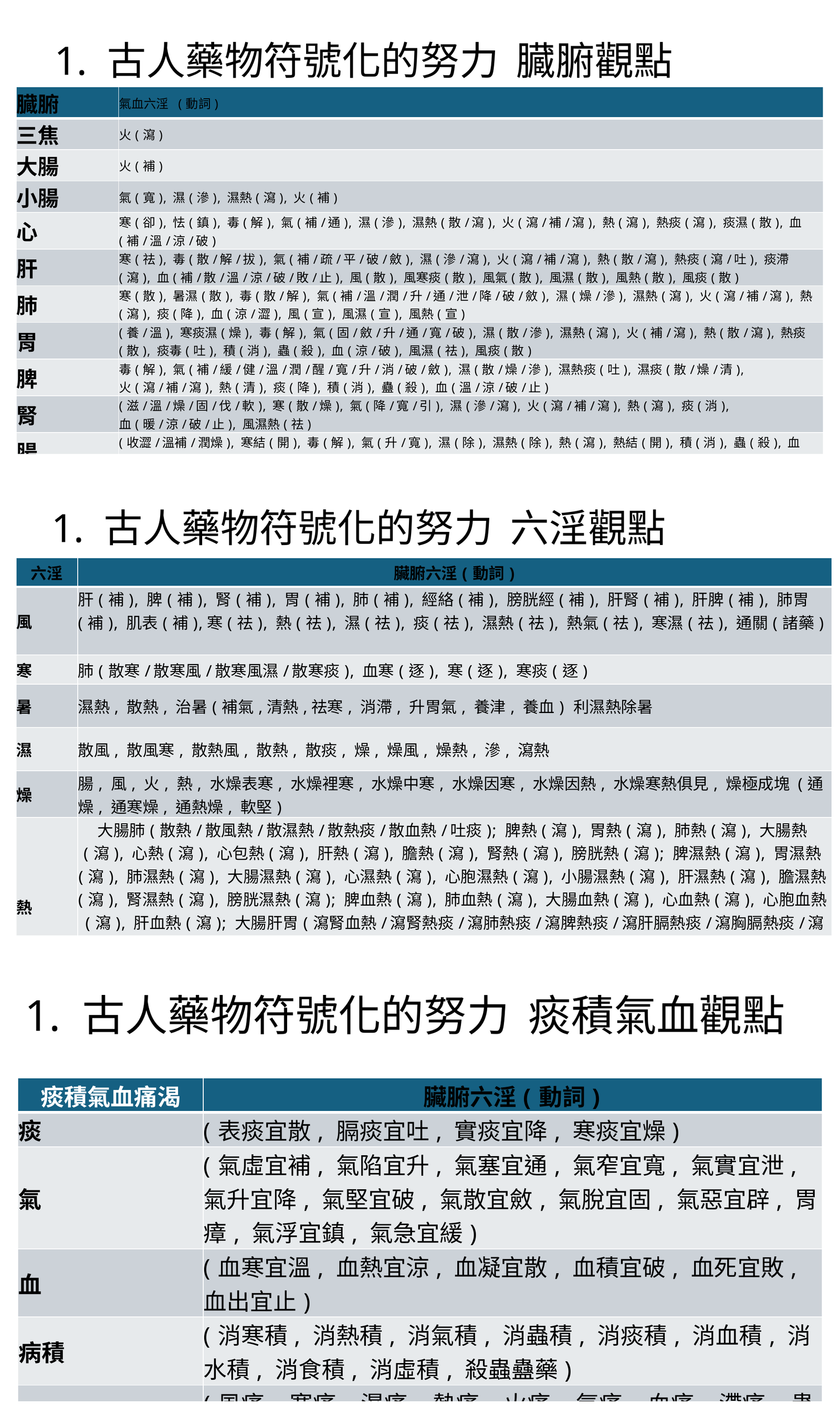
Its core model can be summarized as three lenses: zang-fu, the six excesses, and phlegm, accumulation, qi, and blood. Zang-fu provides a localization system for the five zang and six fu; the six excesses refer to external pathogenic factors such as wind, cold, summerheat, dampness, dryness, and fire; phlegm, accumulation, qi, and blood supplement the model by describing pathological products and obstructions of movement. Through these three lenses, each medicine receives several labels and becomes a node that can be processed by both human cognition and machines.
The approach resembles an early database: each medicine is placed into several fields, enabling the physician to quickly see the zang-fu, pathogenic factor, and therapeutic verb associated with it. Without modern computers, this was an attempt to tag, index, and structure highly complex knowledge.