

Dose-Based Pattern Differentiation and Dosage Design in Classical Formulas
Dosage is one of the most advanced topics in this course. We state directly that many physicians still rely on intuition when choosing quantities, whereas the doses of classical formulas may not be accidental products of experience but deliberately designed intensities of qi-transformational action.
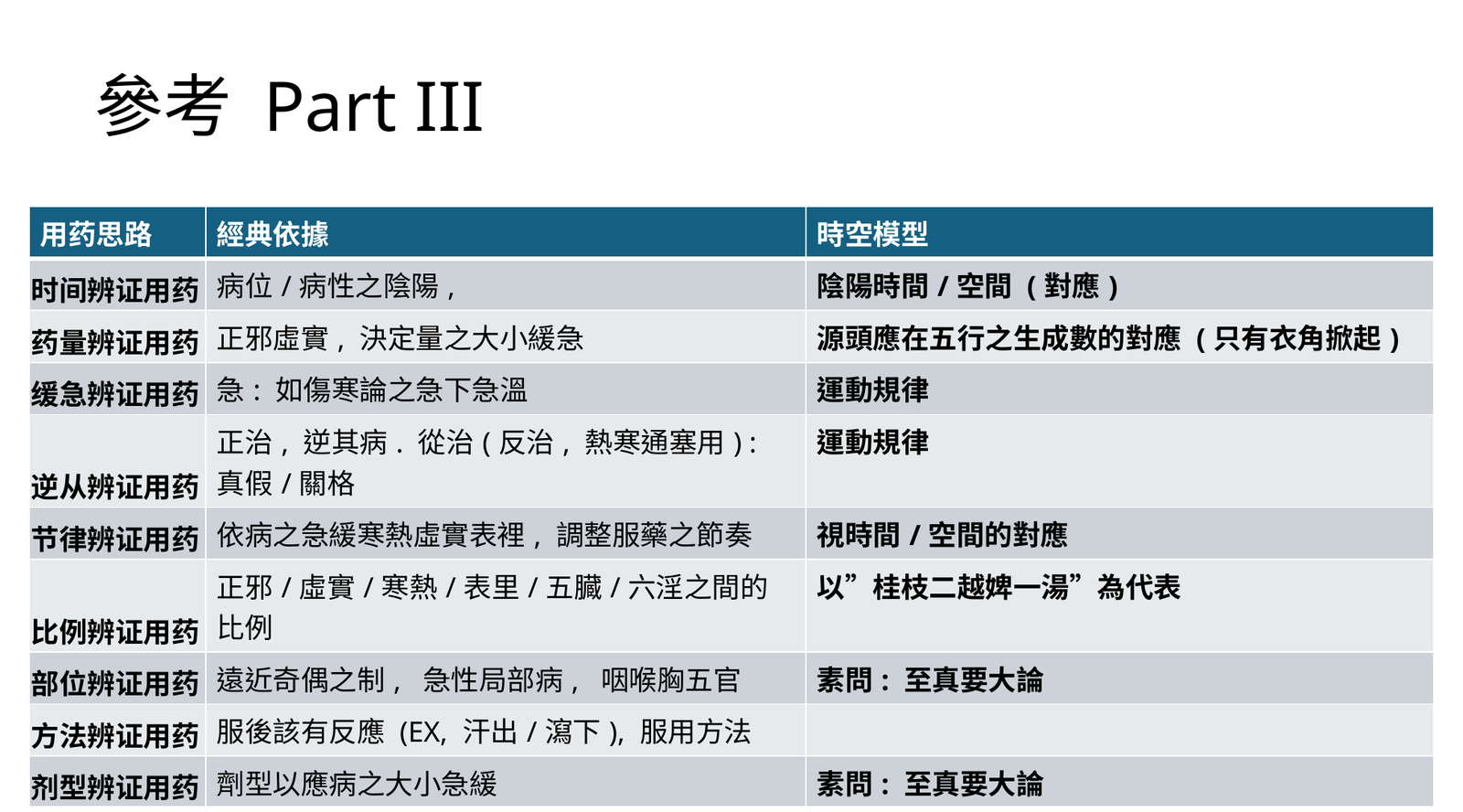
Medicines are largely used to regulate qi; dosage is like the force with which a string is plucked. Flavor determines direction, dose determines intensity. The same drug at two, three, or four liang may play different roles in a formula. Treating dosage as a number that can be freely increased or decreased ignores the internal rhythm and proportion of classical formulas.
We raise several questions worth studying: lily bulb often appears in quantities of seven, rehmannia in six, jujube in twelve pieces, and poria commonly at three liang, though as a minister drug it may also appear at two or four liang. These numbers may relate to the generating/completing numbers of the Hetu-Luoshu and local Five-Phase adjustment, making them promising targets for renewed data analysis.