

The Image within Drug Names and Reasoning from Nomenclature
We emphasize that ancient naming was not arbitrary labeling. Many drug names themselves preserve clues to the medicine’s nature, flavor, form, color, timing, direction, and function. In decoding the Shennong Bencao Jing, the first step is often not to look up “effects,” but to understand the name.
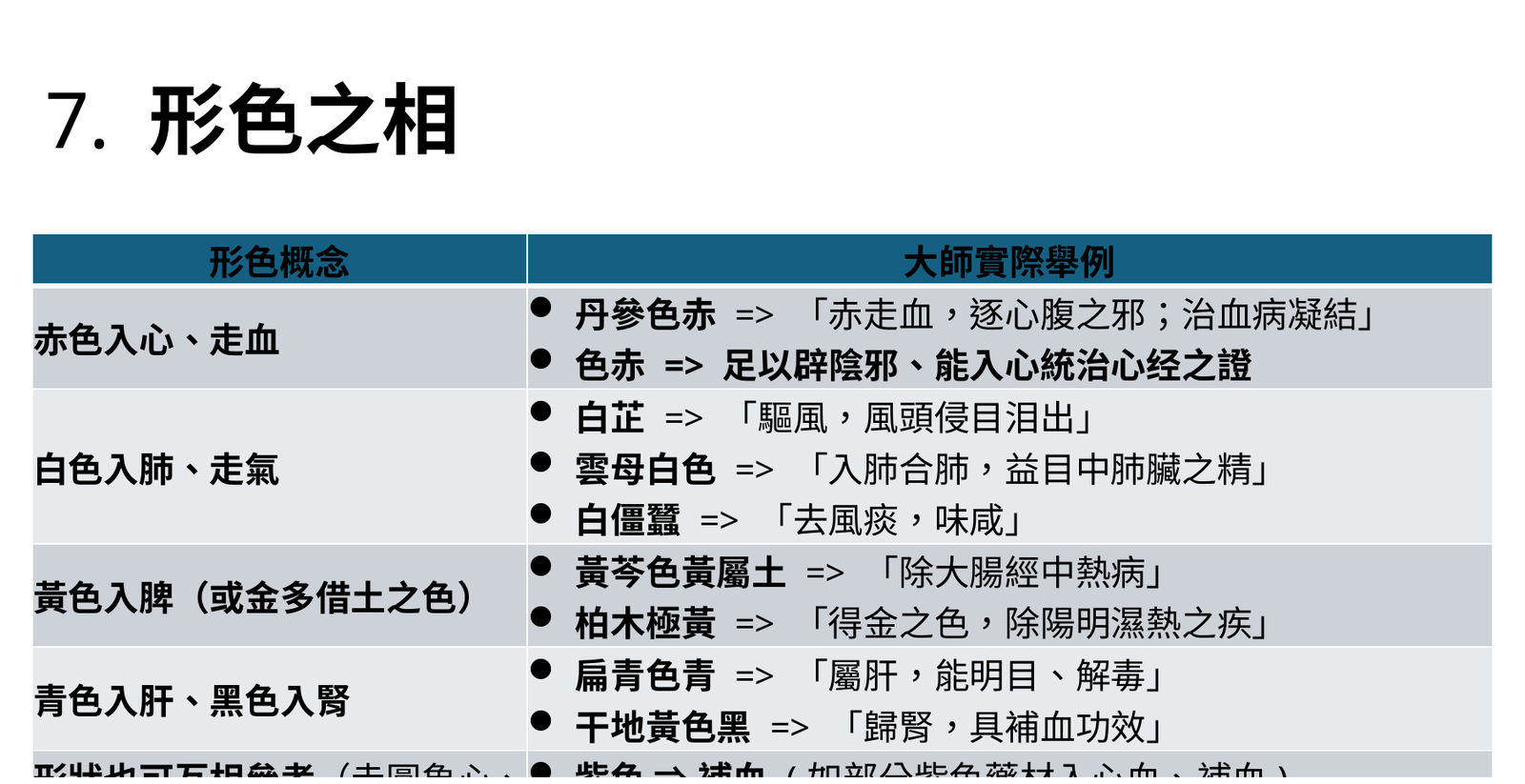
Naming can be divided into several types: names based on color, such as Baizhi and red adzuki bean; names based on flavor, such as licorice; names based on form, such as Wutou; names based on season, such as coltsfoot flower and Xiakucao; and names based on the direction or function of qi, which must be analyzed within the symptomatology and qi-transformation models of the Inner Canon. Together these names form an entrance into the ancients’ image-based mode of thought.
A figurative name such as Wutou immediately evokes associations with bodily location and force. Xiakucao joins the three characters “summer,” “wither,” and “grass,” suggesting a distinctive endowment within seasonal timing and the Four Images. Memorizing effects alone misses the reasoning path contained in the name itself.