

The Prosperous–Ministering–Declining–Imprisoned–Dead Cycle of the Heavenly Stems and Five Phases in the Discourse on Zang Qi and the Seasons
To fully master the computational rules of the temporal model of the five flavors, we must return to its central source—the “Discourse on How the Qi of the Zang Conforms to the Seasons” in the Huangdi Neijing: Suwen.
Its core idea is to reorganize the ten Heavenly-Stem symbols through the Five Phases and, along a continuous time axis, systematically describe five state functions through which Five-Phase energy necessarily passes: prosperous (at maximum strength), ministering (second strongest), declining, imprisoned, and dead (at minimum strength).
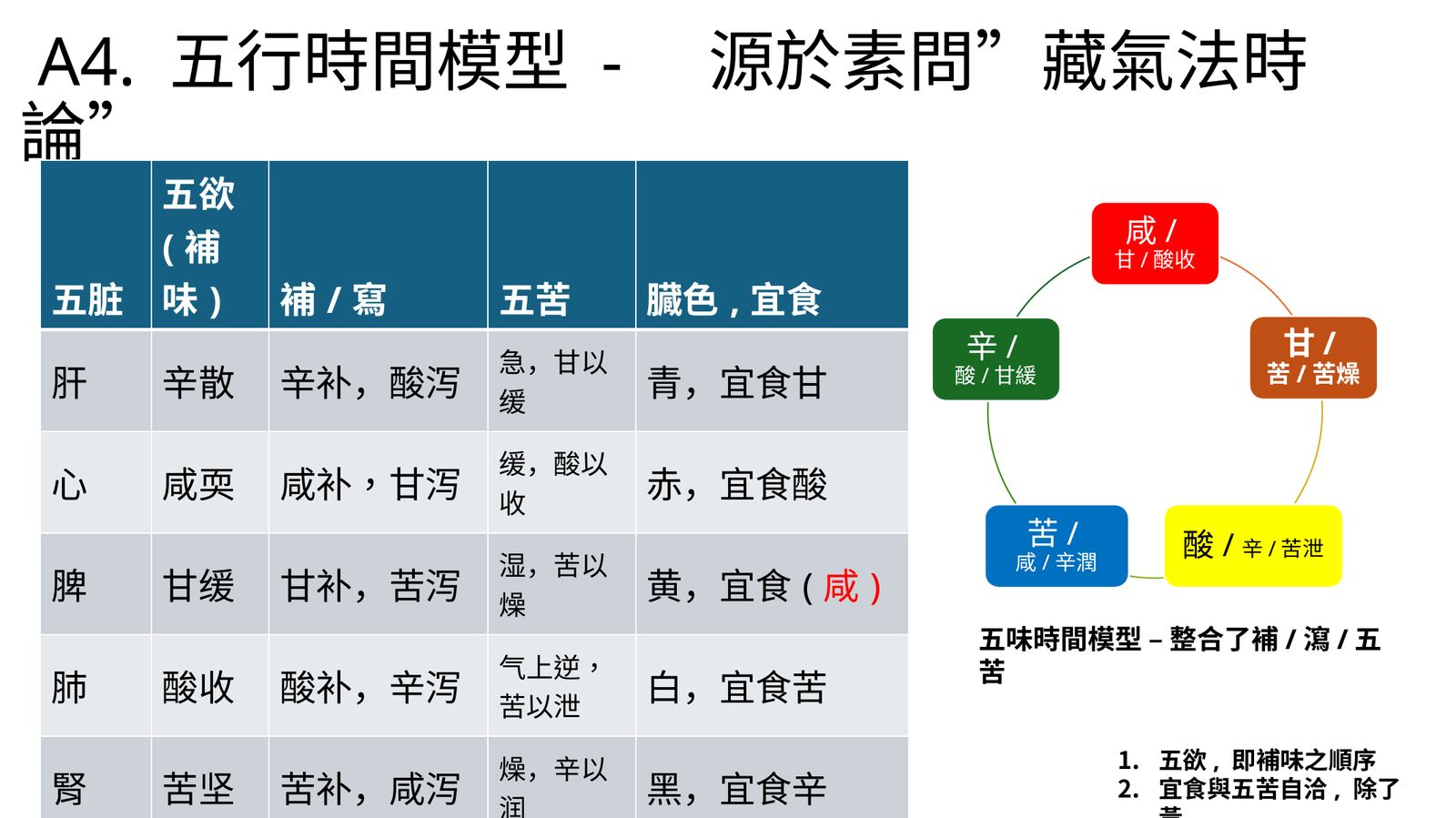
When a particular phase—for example Wood—moves into the “prosperous” phase during a given Heavenly-Stem period, such as Jia–Yi, its energetic output reaches a maximum. When it moves into the “dead” phase, resistance is greatest and energetic output approaches zero.
Within the textual architecture of the “Discourse on How the Qi of the Zang Conforms to the Seasons,” the ancestors rigorously placed the Liver, Heart, Spleen, Lung, and Kidney into the ten-day Heavenly-Stem cycle of prosperous, ministering, declining, imprisoned, and dead, and dynamically worked through their transformations. This Heavenly-Stem cycle function directly governs the later advanced algorithms of “choosing the time to take medicine” and “calculating disease by the day.”