

Land, Phenology, and Flavor Bias under the Annual Rotation of Sitian
When the Three Yin and Three Yang and the Five Phases take their rotating duty positions on the spacetime Ferris wheel, their influence is said not to stop at fluctuations in the air—the climate—but to penetrate deeply into the material substance of the Earth. The principle of land-phenology and flavor bias under annual Sitian rotation proposes that, as the Sitian and Zaiquan symbols change each year, the internal proportions of properties and flavors in plants, fruits, and crops grown that year develop highly regular population-level biases—for example, crops in one year tending broadly toward sourness or bitterness.
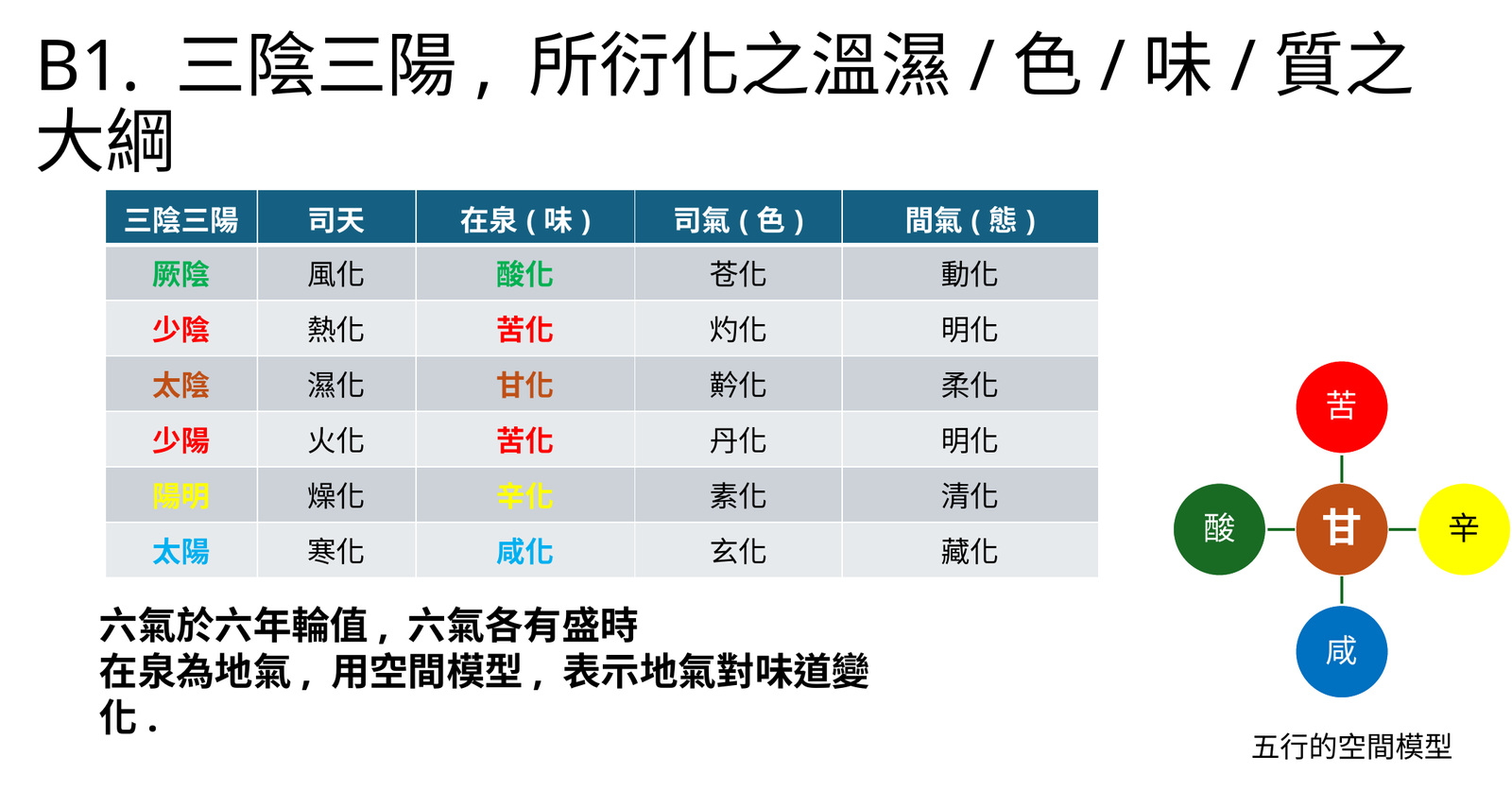
Plants are described here as decoders of the energies of Heaven and Earth. When, in a particular year, Shaoyin Sovereign Fire is Sitian—so that excessive heat prevails—or Yangming Dryness-Metal is Zaiquan, the source proposes that cosmic rays, the angle of incident light, and gravitational tides change in specific ways. These changes are then proposed to interfere directly with enzyme activity and chemical synthesis pathways inside plants growing on the Earth that year, producing collective shifts in the chemical flavors of sour, bitter, sweet, pungent, and salty.
At the beginning of the “Great Treatise on the Utmost Truth,” the ancestors are said to prescribe strict flavor tendencies for medicinal and food crops when each of the Six Qi takes the dominant rotating position: when Jueyin is on duty, crops tend toward sour; when Shaoyin or Shaoyang is on duty, toward bitter; when Taiyin is on duty, toward sweet; when Yangming is on duty, toward pungent; and when Taiyang is on duty, toward salty. A European estate is described as having kept yearly records of wine flavor since 1959, such as in Bordeaux or Burgundy. When the annual “flavor tendencies” of the wines—tannin acidity, bitterness/astringency, and sweetness—were compared as big data with the ancient Chinese sixty-Jiazi Sitian/Zaiquan timeline and with the five flavors assigned each year by the annual Zaiquan (Earth-governing) Three-Yin/Three-Yang pattern in the “Great Treatise on the Utmost Truth,” the article reports that AI judged the accuracy to be approximately 65–70 percent.