

Nine Palaces and Eight Winds: Spatial and Diagnostic Model
Within the larger family of models in the study of Heaven and humanity, there is, in addition to the doctrines of movement and qi that track temporal change, a special model concerned with the spatial regularities of Earth: the Nine Palaces and Eight Winds spatial and diagnostic model. It uses an orderly 3 × 3 matrix to bind the geometry of terrestrial space, directions of airflow, and the distribution of the body’s “nine regions and nine fields” into a highly abstract topological framework.
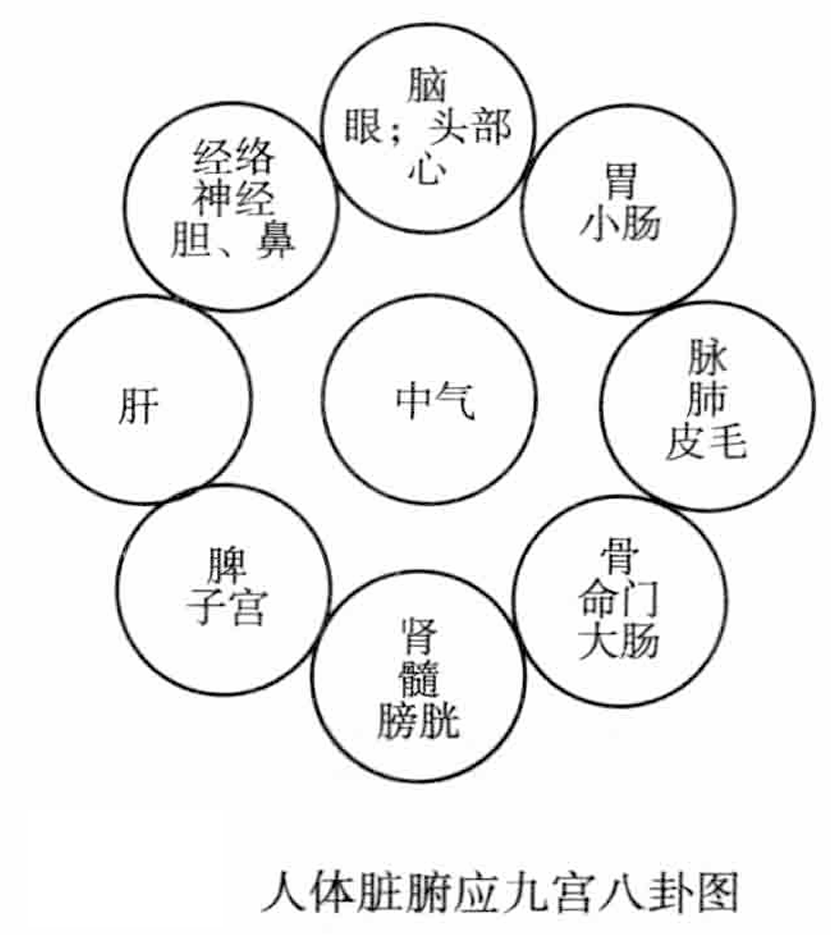
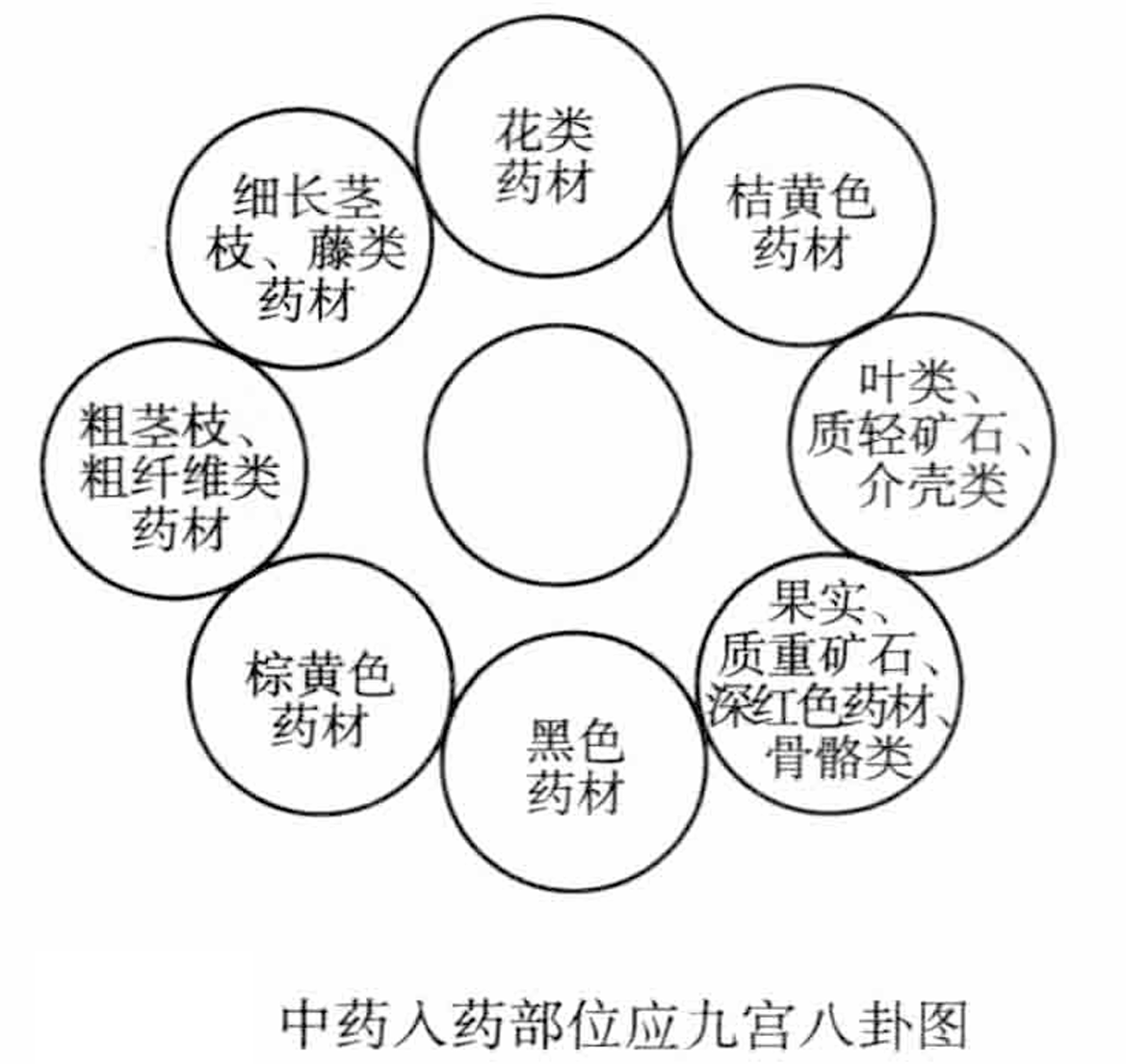
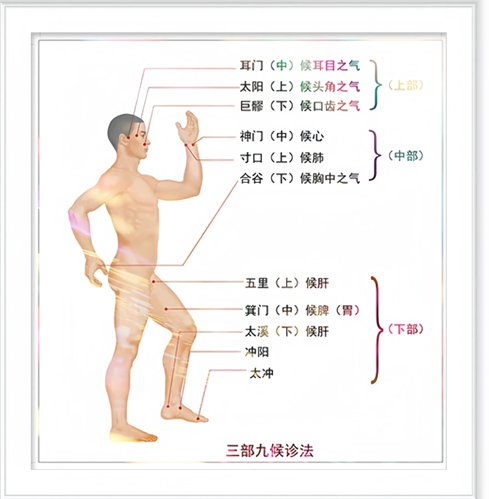
Its source is the Luoshu. The nine-palace grid is presented as a minimal and elegant matrix through which the ancients marked positions and calculated dynamic energetic changes on two- and three-dimensional planes. In body space, it cross-multiplies upper, middle, and lower with Heaven, Earth, and humanity to form nine topological regions. In the external environment, it corresponds to the energetic influences of the Eight Winds arriving from eight geometric directions. It is therefore used as a spatial diagnostic framework for capturing the influence of earthly qi.
In the classical texts, this model is linked directly to the ancient and authoritative three regions and nine indicators method of the Huangdi Neijing: Suwen, in which the head, hands, and feet are each divided according to Heaven, Earth, and humanity to form nine diagnostic observation zones. Contemporary Chinese physician Dong Qianyang, in Circular Movement of the Nine Palaces, further places anatomical regions and the medicinally used parts of herbs into the same Nine-Palace geometry. For example, flower medicines are classified as Fire, south, and the upper part of the grid because plants are especially likely to flower in summer, the Fire season; the blossom is therefore said to encapsulate nature’s most outward-dispersing Fire-Heat quality. In this way, the Nine Palaces model is presented as a tool for guiding both materia-medica reasoning and spatial diagnosis.