

The Shortcut and Limits of Symptom- and Disease-Specific Pattern Differentiation
Our attitude toward symptom-based and disease-specific pattern differentiation is deliberately cautious. They are convenient in learning and clinical work because the human brain cannot process unlimited complexity at once. But if “grasp the main symptom” or “grasp the disease name” is treated as the essence of Chinese medicine, the root of pattern-based treatment is lost.
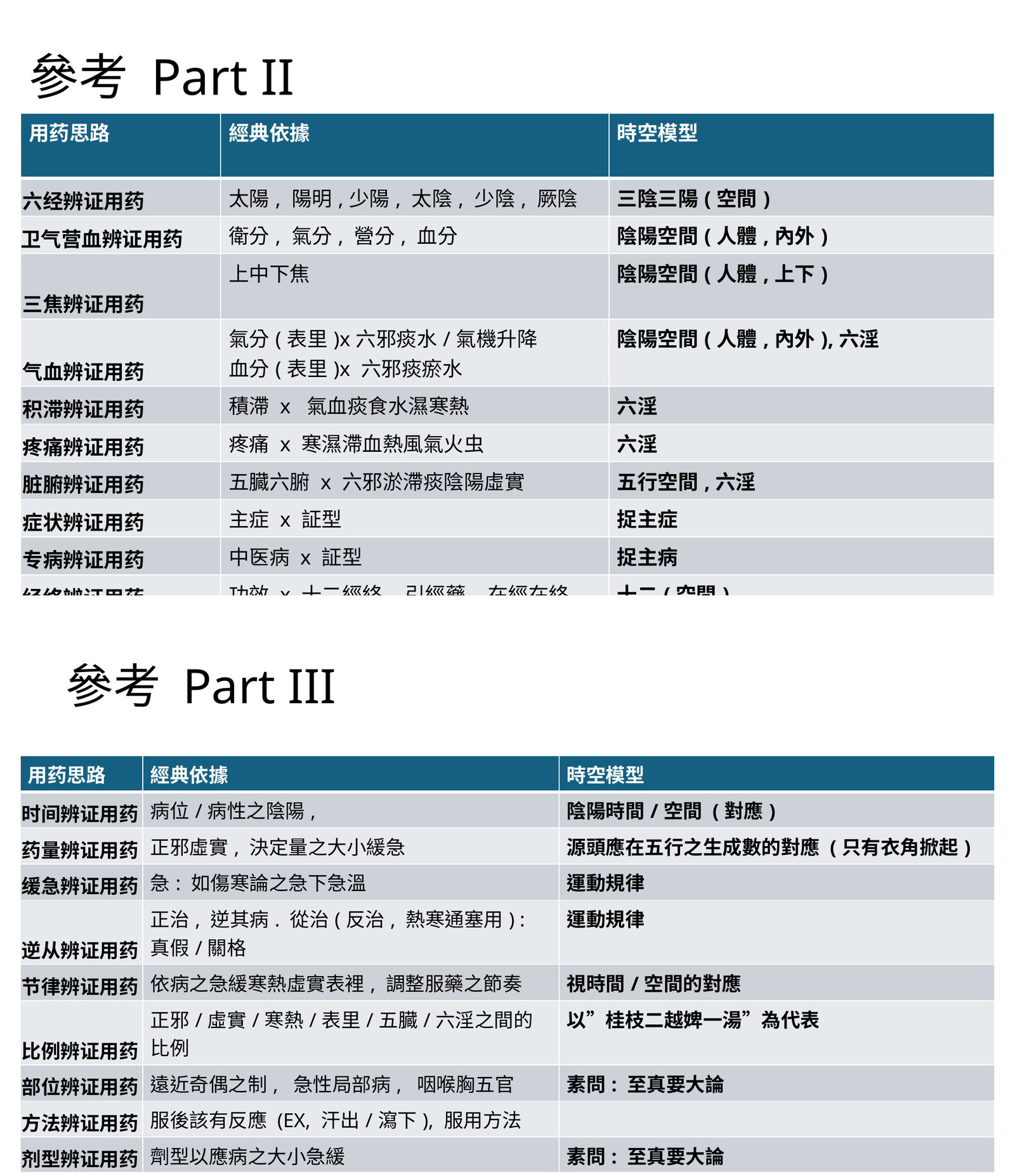
Symptoms and disease names are results, not necessarily causes. A chief symptom helps the physician establish a rapid initial hypothesis; a disease name facilitates communication and classification. But Chinese medicine ultimately aims to treat the qi-transformational mechanism producing the symptoms. If one infers cause backward from result without a rule base from the Inner Canon, similar symptoms can easily be mistaken for the same pathomechanism.
We call these methods unavoidable shortcuts. They can serve machine learning in a “Chinese-medicine brain 1.0” and reduce cognitive load in early teaching. But in a higher-level “Chinese-medicine brain 2.0,” chief symptoms and disease names must be reconnected to Yin-Yang and Five Phases, the Three Yin and Three Yang, inner/outer layers, and spacetime qi transformation.